

Black History Month 2026 is based on a simple but important theme: ‘Honouring Our Communities’. This year's theme asks us to recognise the often ‘unsung’ or overlooked contributors to our communities, including teachers, carers, volunteers, mentors, activists and community leaders who work hard to support and make a difference to others.
Yet recognition and representation do not necessarily translate into inclusion. A University of Cambridge survey found that 88% of Black people had experienced racial discrimination at work, with 98% saying they had compromised aspects of their identity to fit into their workplace.
At FAIRER we’ve seen that organisations can become very focused on who is represented without considering whose contributions are actually being recognised. Diversity and representation matter, but they don’t indicate whether people feel able to speak up, whether they feel safe, valued, or respected. This is an important distinction between diversity and inclusion. “Representation tells us who is in the room, but inclusion determines whether they can shape what happens in it,” says FAIRER MD Dan Robertson.
In this article, we share five ways organisations can move from diversity to inclusion, and spotlight five Black British voices and changemakers positively shaping our communities.
The psychology behind ‘fitting in’
Psychologists Tanya Chartrand and John Bargh found that people can unconsciously mirror the behaviours, postures and mannerisms of those around them, and that being mimicked can make interactions feel more positive and increase perceived similarity between people. The ‘chameleon effect’, as it’s called, suggests that our perceptions are shaped by the people around us – often without us realising it. Additionally, ‘affinity bias’, which is the tendency to prefer people who appear more similar to ourselves, can unfairly affect workplace outcomes when decision-making is based on instinct or chemistry rather than merit-based assessment.
Research into 'stereotype threat' (the risk of confirming a negative stereotype about one's group), including the work of psychologists Claude Steele and Joshua Aronson, also suggests that being aware of negative stereotypes can affect people’s behaviour. In the workplace, this can contribute to the pressure some employees feel to adjust how they speak, behave or present themselves in order to avoid being judged or stereotyped.
Together, these psychological effects help explain why simply increasing representation is not enough. People may enter the room, but still feel pressure to adapt, remain cautious about how they are perceived, or find that those who feel more familiar are given greater trust and opportunity.
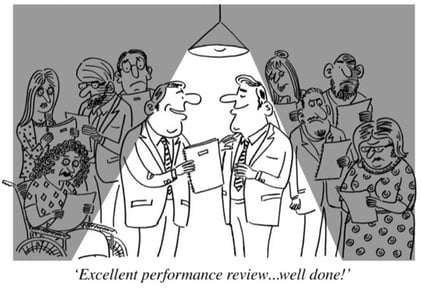
Representation doesn’t mean everyone feels recognised
Our conscious inclusion training helps organisations recognise where affinity bias may be influencing decisions and build greater objectivity into how people are assessed and given opportunities. We saw this in practice when we delivered conscious inclusion training at a transport business, helping them understand how everyday behaviours can either support or undermine an inclusive workplace.
Moving from diversity to inclusion requires leaders to ask some difficult questions around representation, voice, influence, adaptation and recognition:
|
Representation |
Who gets into the room? |
|
Voice |
Who gets heard once they are there? |
|
Influence |
Who has the power to challenge exclusion? |
|
Adaptation |
Who feels pressure to change to fit in? |
|
Recognition |
Who gets visibility, opportunity and sponsorship? |
5 ways to move from diversity to inclusion
1. Deepen your data – look at the people behind the percentages
In the UK, businesses with 250 or more employees are required to report their gender pay gap, while the government is introducing mandatory ethnicity and disability pay gap reporting for large employers. That said, numbers do not tell the whole story; we need to look at the people behind the percentages. For example, someone can be represented in an organisation and still experience exclusion from its decision-making processes or career progression opportunities. They can be present in meetings without feeling able to speak up, or promoted into leadership while still feeling pressure to cover aspects of their identity.
Research from the University of Cambridge found that 88% of Black people surveyed had experienced racial discrimination at work, while 98% said they had compromised aspects of their self-expression or identity to fit into their workplace. These figures illustrate the gap that can exist between representation and people’s experience of inclusion and belonging. Without employee data, it is not possible to establish the nuances of intersectionality, which would allow leaders to unlock the specific data necessary to build targeted solutions.
Data collection should begin at the start of the employee lifecycle, with metrics collected around who is offered an interview, who receives a job offer and who accepts those offers. If people from diverse backgrounds do not approach the organisation, drop out at the application or interview stage, or if a recruit subsequently leaves the business soon after joining, investigations are necessary.
Our work with HaysMac demonstrates how data can reveal gaps beyond headline diversity figures. Following an engagement survey, HaysMac partnered with FAIRER on a DEI audit analysing recruitment, talent development and progression, helping identify where further action was needed, which subsequently saw its inclusion score rise to the 80th percentile.
2. Ask who is being heard, not just who is present
65% of Black and Asian employees feel they belong at work, compared with 70% of White employees. Organisations should look closely at who is speaking up in meetings and decision-making conversations – and who gets interrupted or silenced. Participation is a useful measure of inclusion because it considers the quality of a person’s experience at work. It’s possible that a room can be diverse without being inclusive if the same voices continue to dominate over others. Leaders should create space for the quieter voices, actively invite challenge, and ask for different perspectives – especially from those they don’t often hear from.
Employee resource groups (ERGs), business resource groups (BRGs) and staff networks are useful tools for creating more equitable and inclusive workplaces by supporting employees from underrepresented or minoritised groups. They can provide a space for employees to share lived experiences and build a sense of belonging, while also giving organisations insight into experiences and perspectives that may otherwise go unheard. When ERGs have access to senior leaders and decision-making, they can help challenge exclusionary practices and influence organisational priorities. To be effective, leaders need to listen, act on feedback and avoid placing the responsibility for inclusion solely on the people experiencing exclusion.
3. Use your influence to challenge exclusion
The people experiencing exclusion often have the clearest understanding of where the barriers are, but they should not be expected to dismantle them alone. As part of our inclusion allyship training, we promote the idea that effective allyship requires interruption skills and courage. True allyship means recognising your power and privilege, and using that position to challenge the behaviours, assumptions and systems that create unequal experiences. Explore five examples of allyship in action:
- Challenging a comment or assumption that would otherwise go unaddressed
- Questioning why the same people are repeatedly given opportunities or visibility
- Making space for a colleague whose contribution or expertise is being overlooked
- Speaking up when a decision or process creates an unfair outcome
- Using your influence to make sure concerns raised by others are heard and acted on
4. Move from colour-blind to a colour-brave approach
Avoiding conversations about race does not make racial bias disappear. While it may be well-intentioned, saying “I don’t see race” can mean we fail to recognise how race, culture and different experiences affect people at work. A “colour-brave” approach starts with being willing to have those conversations.
“Leaders need to ask people about their experiences and actually listen to the answer,” says Dan. Look at your data and question why outcomes might differ between groups. If someone raises a concern about racial bias, take it seriously rather than immediately looking for another explanation or passing an exclusionary comment off as a joke or banter. Look at what happened, who made the decision and whether the same thing would have happened to someone else.
Leaders should also look at the judgements made every day. Who is seen as confident? Who is described as difficult? Who is considered a good cultural fit? Who gets the benefit of the doubt? These judgements can influence recruitment, progression, performance reviews and access to opportunities, often without people recognising the underlying bias involved.
FAIRER saw this approach in practice when we worked with a global investment bank on its race inclusion programme, helping managers move from a colour-blind approach towards more open conversations about race and privilege. Over the first two years, 3,811 UK employees took part in the programme, including 91% of managers, and the workshops subsequently moved from voluntary to mandatory participation.
5. Make recognition and sponsorship intentional
Not everyone gets the same visibility at work. In fact, the CMI reported that 71% of Black employees reported feeling overlooked for opportunities at work because of their identity. Some people have regular access to senior leaders and benefit from informal networks that open doors. Others make an equally important contribution without getting the same exposure or recognition.
Additionally, Harvard Business Review found that only 5% of up-and-coming Black employees had succeeded in securing sponsorship, compared with 20% of their White peers. While sponsorship aims to promote fairness of opportunity, it operates largely behind closed doors, meaning it’s especially vulnerable to bias. Without inclusive measures, it can reinforce favouritism and perpetuate existing power structures. Instead of giving people more sponsors, organisations should be disrupting biased systems and rebalancing to a fairer approach, based on objective criteria and bias removal.
This disruption requires answering some uncomfortable questions:
- Who has access, and who does not?
- Who benefits from how this currently operates?
- Where are we relying on informal judgement rather than explicit criteria?
- What risks are we choosing not to see?
- Where are we supporting people to jump into a game which is rigged, rather than questioning whether the game should be played fairly?
We should recognise the people whose achievements are already visible, as well as spotlighting those who are currently overlooked – a sentiment we promote through our conscious inclusion training. Leaders, HR and inclusion professionals should also consider who is creating opportunities for others, or doing work that has become so familiar that it is no longer noticed.
Five Black voices shaping our communities
This year's Black History Month theme is also an opportunity to spotlight people whose contributions have shaped culture and communities. We asked the FAIRER team to choose five Black British individuals, whose voices reflect different forms of contribution – from representation and mental health advocacy to literature, art, activism and creating space for others who have historically been overlooked.
1. David Harewood
Born in Birmingham to Barbadian parents, actor David Harewood has spoken openly about growing up in a Caribbean household and the cultural silence around mental ill-health. He has reflected on his need to 'cover' – a pressure to adapt parts of yourself to fit in – and on experiences of being judged by both Black and White peers for not fitting in.
His own experience of mental ill-health, including how he was perceived and treated as a Black man within the healthcare system, has further shaped his advocacy. By speaking candidly about his own experiences with mental ill-health and racial discrimination, he challenges stigma and encourages open conversations, helping to make experiences that are often hidden more visible. From becoming the first Black actor to play Othello at the National Theatre to challenging stereotypes through his work, David demonstrates the power of representation. As he explains, “I grew up at a time when there weren’t many Black people on television […] and I think that seriously put me at a disadvantage.” His career and advocacy demonstrate how representation can shape aspirations, belonging and self-confidence.
2. Bernardine Evaristo
Bernardine Evaristo's career offers a powerful example of creating space for voices that have historically been overlooked. As a writer, educator and advocate, she has championed Black and Asian writers and challenged the structures that determine whose work receives attention. She promotes the idea that those being asked to solve a lack of diversity are not necessarily the people who hold the power to change it.
When reflecting on how to solve a lack of diversity in the publishing industry, Bernardine says 'I recommend that they ask the gatekeepers for advice. They own the door and have the keys.’ This sentiment captures an important aspect of inclusive leadership: understanding where power actually sits, recognising the role you have within that, and being prepared to question systems that aren’t giving everyone the same opportunity to thrive by leaning into allyship principles.
3. Linton Kwesi Johnson
Linton Kwesi Johnson has spent decades giving voice to experiences of racism, injustice and Black British life. Born in Jamaica and brought to London as a child, Johnson became involved in the Black Panther movement and developed dub poetry – a form of poetry set to reggae rhythms – as a distinctive way of documenting Black experience in Britain.
His work has addressed racism, policing and institutional power, while his use of Jamaican patois challenged expectations about whose language and cultural expression belonged in mainstream British culture. His work asks leaders to consider whose voices are missing and whether organisations are making room for difference or simply expecting conformity. As Johnson puts it: “In a racist society, it is not enough to be non-racist, we must be anti-racist.”
4. Dr Maggie Aderin-Pocock
Dr Maggie Aderin-Pocock is a physicist, space scientist and passionate advocate for greater diversity in STEM. She holds a PhD in mechanical engineering, and her contribution to science and education has been recognised through numerous awards and honours, including an MBE and Fellowship of the Royal Society.
As a Black woman working in a traditionally underrepresented field, Maggie has spoken openly about her own experiences and the importance of representation in STEM. She actively encourages young people from diverse backgrounds to see science and engineering as careers in which they can belong and succeed. Her approach reflects the value of curiosity in inclusive leadership – being willing to learn from perspectives and experiences different from our own.
As Maggie explains: “Science can be a great equalizer. It doesn’t matter where you come from or what your background is, if you have the curiosity and the passion to explore, you can make a contribution to science.” Her courage to speak out and commitment to opening up STEM to young people make her an important voice to amplify.
5. Dame Magdalene Odundo DBE
Dame Magdalene Odundo DBE is a Kenyan-born British ceramic artist, educator and cultural leader, recognised internationally as one of the world’s most influential contemporary ceramicists. Her distinctive hand-crafted vessels draw on African, European, Asian and Indigenous artistic traditions.
Throughout her career, she has championed cultural exchange, learning and the re-evaluation of ‘indigenous’ craft as art, while challenging assumptions about whose artistic traditions are valued.
Her work demonstrates the power of cultural curiosity, cross-cultural learning and respect for diverse traditions. By bringing together influences from different cultures and disciplines, Odundo has challenged historic Eurocentric assumptions about craft and fine art, helping broaden understanding of whose cultural contributions are recognised and celebrated.
As an African-British artist, Odundo’s work reflects both her cultural heritage and experiences across different societies. She demonstrates that people do not need to choose between identities, but can draw strength from multiple sources of belonging. Her career shows how inclusion can be fostered through learning, openness to different perspectives and creating space for diverse forms of knowledge to influence our thinking.
Amplify overlooked voices in your workplace
Whose voices are still missing in your workplace? Creating a more inclusive workplace starts with understanding where people are experiencing barriers. FAIRER’s DEI audits use workplace data and lived experience to identify gaps that can otherwise go unnoticed. Our conscious inclusion training then helps leaders and teams understand the behaviours and assumptions that shape those experiences, giving them the practical tools to do something about them. If you want to move beyond representation and understand what inclusion looks like in practice across your organisation, get in touch for a complimentary call with one of our consultants.