

Friend of FAIRER interview: Vanessa Linden
Home / Inclusion expert interview: Vanessa Linden
As part of our Friend of FAIRER series, FAIRER DEI Consultant Barry Boffy MBE sat down with Vanessa Linden, Learning & Development Manager at Royal Ballet and Opera, to discuss inclusion, leadership and the power of human connection.
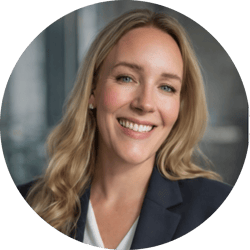
About Vanessa Linden
Vanessa Linden is Learning & Development Manager at Royal Ballet and Opera (RBO), where she designs and delivers the learning, leadership, and organisational development strategies. She partners with artistic, technical, and corporate teams to build the frameworks, conversations, and learning moments that make RBO feel more connected, confident, and capable.
How do you define fairness in today's workplace?
"When I think about fairness, I don't think about treating everyone exactly the same. Fairness is about understanding that people start from different places, bring different experiences with them, and may need different forms of support in order to thrive.
"Too often, fairness is interpreted as consistency, but consistency and fairness are not always the same thing. Organisations can have policies that apply equally to everyone yet still create experiences that feel very different depending on an individual's circumstances, identity or background.
"Too often, fairness is interpreted as consistency, but consistency and fairness are not always the same thing."
"For me, fairness means creating an environment where everyone has a genuine opportunity to contribute, develop and succeed. It means ensuring that decisions, opportunities and access are not determined by factors unrelated to performance or potential. It also means creating systems that recognise individual differences rather than expecting people to fit into a single model of success.
"The workplaces that feel fair are usually those where people believe their voice matters. They trust that they will be heard, that decisions are made transparently and that they will have access to opportunities based on merit. Ultimately, fairness is about creating the conditions in which people can do their best work while feeling respected and valued for who they are."
What do you see as some of the biggest barriers to workplace fairness and inclusion?
"One of the most significant barriers is a lack of diversity in the spaces where important decisions are made. Many organisations have evolved over decades, and leadership teams often reflect historical patterns rather than current workforces. As a result, there can be blind spots around how systems, policies or workplace norms affect different groups of people.
"I don't believe this is usually about deliberate exclusion. More often, it's about familiarity. We tend to design environments based on our own experiences and assumptions. If everybody involved in making decisions has had similar experiences, there is a risk that alternative perspectives are unintentionally overlooked.
"This can influence everything from recruitment practices and career progression opportunities through to communication styles and workplace behaviours. Small decisions can accumulate over time and create sizeable differences in people's experiences.
"I also think organisations sometimes focus heavily on external inclusion while paying less attention to inclusion internally. They may think deeply about how customers, audiences or service users experience accessibility, but not always apply that same level of scrutiny to employee experience.
"Creating truly inclusive workplaces requires curiosity. Leaders have to be willing to ask difficult questions, seek perspectives they may not naturally encounter and recognise that good intentions alone are not always enough. Inclusion requires continuous listening and continuous learning."
You have worked across different cultures. How has that shaped your view of inclusion?
"Working in different countries has reinforced my belief that inclusion is about much more than visible diversity. It is also about culture, communication and differing expectations of how people engage with one another. Having experienced both Swedish and UK workplace cultures, I have seen how assumptions about leadership, hierarchy and participation can vary significantly.
"Inclusion is not simply about representation; it is about creating an environment where those different perspectives are genuinely welcomed and used."
"In Sweden, there is often a stronger expectation that people will contribute their opinions regardless of seniority. Challenging ideas is generally viewed as a positive contribution to discussion rather than a challenge to authority. Leaders are expected to facilitate dialogue and consider multiple viewpoints. In contrast, many UK workplaces still retain elements of hierarchy that can influence how comfortable people feel speaking up. In some environments, employees may wait to be invited into a conversation before sharing an alternative perspective.
"Neither approach is inherently better. However, these differences highlight how easily organisations can mistake familiarity for effectiveness. What feels normal to one person may feel restrictive to another. This is why diversity of thought matters so much. When people with different cultural experiences come together, they often ask different questions, identify different risks and generate different solutions.
"The more diverse the perspectives around a table, the more likely an organisation is to make informed decisions. Inclusion is therefore not simply about representation; it is about creating an environment where those different perspectives are genuinely welcomed and used."
What role does inclusion play in learning and development?
"I believe learning and development should play a significant role in helping organisations create more inclusive cultures, but inclusion cannot sit solely with one function. It has to belong to everyone.
"Within learning and development, inclusion begins with design. We need to think carefully about accessibility, learning preferences, individual differences and the variety of ways people engage with information. A programme that works brilliantly for one group may be far less effective for another.
"However, I also think there is an important balance to strike. There is sometimes a danger that inclusion becomes interpreted as removing all challenge or discomfort. In reality, some of the most valuable learning experiences involve stepping outside our comfort zones. Growth often comes from trying something unfamiliar, working with people who think differently or engaging in conversations that stretch our perspectives.
"The goal should not be to eliminate challenge. The goal should be to create environments where people feel psychologically safe enough to engage with that challenge. Learning is ultimately a social experience. It is about sharing perspectives, exploring ideas and developing understanding. Inclusion makes that process stronger because it allows more voices and experiences to be heard. When inclusion and learning work together effectively, they create the conditions for both individual growth and organisational performance."
You've spoken passionately about the importance of human connection. Why do you think this matters so much?
"Human connection has always been important, but I think it has become even more critical in recent years. Many organisations have gone through significant periods of change. Hybrid working, digital communication and evolving ways of collaborating have created many benefits, but they have also altered how people build relationships at work.
"I've noticed that people can sometimes move straight into tasks and agendas without creating the personal connections that underpin effective teamwork. Meetings begin immediately with objectives, updates and actions. While this can feel efficient, it can mean we miss opportunities to build trust and understanding.
"The reality is that people perform better when they feel connected to those around them. They are more likely to collaborate, share ideas, seek support and contribute openly when relationships already exist. Something as simple as taking time to introduce people properly, understanding their background or finding common ground can transform the quality of a working relationship.
"What is often dismissed as small talk is actually relationship-building. Those interactions create the foundation upon which trust is built.
"Inclusion is not solely about organisational systems. It is also about creating environments where people experience genuine belonging. Human connection is one of the most powerful ways organisations can do that."
How should organisations balance inclusion with different individual needs?
"The answer lies in flexibility rather than standardisation. Organisations sometimes look for a single solution that will work for everyone, but inclusion requires us to recognise that people engage differently. What helps one person participate may not work for somebody else.
"For example, some individuals are energised by large group discussions, whereas others contribute more effectively in smaller groups or through written reflection. Some people like to process information quickly and respond immediately, while others prefer time to reflect before sharing their thoughts.
"An inclusive organisation creates multiple pathways for engagement. Importantly, this does not mean lowering expectations. Inclusion is not about reducing standards or removing accountability. It is about ensuring that people have equitable opportunities to contribute and demonstrate their capabilities.
"The organisations that do this well are often those that remain curious about employee experience. They avoid making assumptions and instead ask people what helps them perform at their best. That willingness to adapt can have a profound impact on both engagement and performance."
What does effective inclusive leadership look like?
"For me, inclusive leadership begins with self-awareness. Leaders need to understand that their own experiences are not universal and that their perspective is only one of many. Inclusive leaders remain curious, open-minded and willing to learn from others. They are also adaptable. Rather than expecting everyone to work in the same way, they recognise that different people may need different forms of support, communication or development.
"Importantly, inclusive leadership is not about having all the answers. It is about creating environments in which people feel able to contribute their expertise, perspectives and ideas.
"The best leaders I have encountered are those who actively seek out views that differ from their own. They don't surround themselves with people who simply agree with them. They create space for challenge, discussion and debate because they understand that this leads to better decisions.
"Inclusive leadership is also deeply connected to trust. When employees feel heard, respected and valued, they are more likely to engage fully in their work and contribute their best thinking.
"Ultimately, inclusive leadership is not a programme or an initiative. It is a way of leading people that recognises the value of human difference and uses that difference as a strength."
What practical behaviours demonstrate inclusive leadership?
"One of the simplest and most powerful indicators of inclusive leadership is visibility. Employees pay attention to what leaders do much more than what leaders say. An organisation can have excellent values statements and policies, but people form judgements based on everyday behaviours.
"When leaders attend induction sessions, take part in learning programmes, visit teams, engage in employee networks and make time for conversations, they send a powerful signal that people matter.
"I often think about the phrase "open-door policy". While it sounds positive, the reality is that an open door alone does not create inclusion. Individuals also need to feel comfortable enough to walk through that door.
"That requires leaders to be approachable, curious and genuinely interested in hearing different perspectives. Inclusive leaders ask questions. They listen carefully. They acknowledge what they don't know. They create opportunities for others to contribute rather than dominating every discussion.
"Most importantly, they model the behaviours they want to see throughout the organisation. Culture is shaped by what leaders consistently demonstrate. If leaders show respect, curiosity, openness and humility, those behaviours become embedded within the wider organisation. If they don't, employees quickly notice that too. Inclusive leadership therefore starts with visible action. People need to see inclusion being practised, not simply discussed."
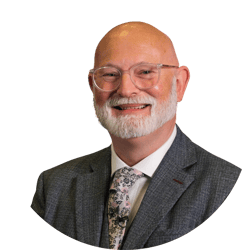
A word from Barry
Barry Boffy MBE, Global DEI Consultant at FAIRER, shares his key takeaways from Vanessa's interview.
My conversation with Vanessa was a timely reminder that inclusion is often shaped less by organisational policies and more by everyday experiences at work. She highlighted the importance of creating environments where people feel heard, valued and able to contribute as themselves. Her reflections reinforced a principle I see repeatedly in my work with global clients: fairness is not about treating everyone the same, but recognising individual differences and creating equitable opportunities to succeed. What particularly resonated was her emphasis on curiosity, human connection and inclusive leadership. Her observations reinforced the importance of trust, belonging, psychological safety and demonstrating inclusion through everyday behaviours.
If you would like to be considered for an expert interview, or want to further discuss any of the themes covered in Vanessa's interview, please get in touch.
More expert interviews
DEI expert interview: Peter MacDonald Hall (UCA)
Start ReadingDEI expert interview: Zoe Kennedy (King’s College London)
Start ReadingDEI expert interview: Brit Pickering (NESO)
Start ReadingDEI expert interview: Iman Atta (Tell MAMA)
Start ReadingDEI expert interview: Lisa Perkins (Wesleyan)
Start ReadingDEI expert interview: Mark Lomas (Lloyd's of London)
Start ReadingWant to discuss your DEI journey?
Book a complimentary one-to-one consultation session with us and let us explore your specific needs in detail. Contact us to start the conversation today.