
Friend of FAIRER interview: Sian Briddon
Home / Inclusion expert interview: Sian Briddon
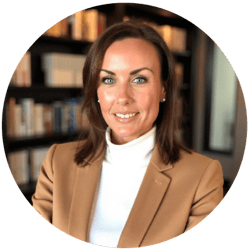
As part of our Friend of FAIRER series, Sian Briddon, NED of MHFA England, and Silver Member of the Institute of Equality & Diversity Professionals, sits down with FAIRER's Inclusion Partner, Laura Drakeford, to discuss what fairness and wellbeing at work really looks like.
About Sian Briddon
Fairness needs to be considered from the start
Siân explains why fairness and inclusion need to be embedded from the outset and explores the benefits of cross-departmental collaboration.
Mindset is really important when we think about wellbeing and DEIB (Diversity, Equity, Inclusion, Belonging). The strongest work is when they're not separate and they're considered together. They both align around psychological safety, employee voice, inclusive leadership, and equitable access to support.
"For me, fairness and inclusion need to be built into the design from the start, not assessed as a final check before launch."
"Collaboration is really important, too. HR, employee relations, risk, compliance, legal, internal communications, L&D (Learning & Development) and senior leaders all have a part to play in that collaboration, all the way up to the Executive Committee and Board. That's where your sponsors are sitting.
"Employee networks and peer support groups also have a role to play. When everyone's got their own accountability, but you're all pulling in one direction for that shared outcome, you get the best results. I'm a firm believer that the more people you get around the table who can contribute to something, the better the outcome is going to be."
The roles of DEIB and wellbeing are becoming increasingly connected
For Siân, the growing overlap between DEIB and wellbeing is changing the skills and knowledge expected of professionals in these roles.
"One of the biggest considerations for me is that DEIB and wellbeing are often treated as separate disciplines when, in reality, they are closely connected. You can be heavy on one or the other, but you need to have a good foundation and an acceptance that, if you are an expert in DEIB, it's increasingly important to understand wellbeing and the role that intersectionality plays. It's also important to understand where wellbeing and DEIB sit across the whole employee lifecycle, from attraction through to exit.
"The roles are going to evolve. I'm seeing an increasing number of roles advertised where it's culture and inclusion, or broader inclusion and wellbeing responsibilities. You don't need to be a master of all of it, but you need to have a good overview of that wider piece.
"That shift won't be easy for everyone. It may require people to broaden their expertise into areas they haven't previously worked in and may feel less confident discussing. As soon as you start talking about wellbeing and mental health, some people might not be comfortable going into that space, either because of lived experience or because it's such a broad field. But having made that transition myself, I’m proof that it is doable.
"There's also a real importance around language and the impact of language. Someone might say, 'I'm having a manic day,' without thinking about what that means to somebody who has experienced mania as part of a mental health condition. It might just be your current language, but until you know the day that someone's had and what they're bringing with them, you don't know how that could resonate with them."
Employee networks need to be the agitators
Siân celebrates employee networks as voices for change, challenging organisations to address gaps and respond to lived experience.
"Employee networks can be a real force for change. They're the ones who call out emerging risks and existing gaps, and who have people's backs when an individual is having a challenging time and isn't getting the traction they need.
"The biggest role they've got, and they need to be braver in doing it, is being the agitator. They're the ones who will stick their elbows out a little bit and say, 'Yeah, I get what you're trying to do there, but that's not going to sort the problem.' They can challenge organisations when action becomes performative or is simply about polishing a situation to make it feel better, and say, ‘No, not good enough.’
"I've seen examples where employee feedback has led to significant workplace improvements. In one case, concerns around accessibility highlighted barriers that prevented some colleagues from fully participating in the workplace. Employee networks helped bring those experiences to the forefront and were instrumental in securing funding to drive positive change.
"Employee networks are driven and created by colleagues in response to real needs. Much of the work is done voluntarily alongside people's day jobs. I've seen networks play a vital role in shaping policies, raising awareness of emerging issues and bringing lived experiences to the attention of senior decision-makers. They can play such a key role, but because it's not delivery, product, process or customer service, I just don't think they get the internal recognition they deserve."
We need to look beyond the annual survey
Siân advocates for a broader approach to employee listening, using multiple touchpoints across the employee lifecycle to understand what people really need.
"Organisations have initiatives like pulse and culture surveys, but even early indicators like onboarding surveys can tell you a huge amount. There are opportunities throughout the employee lifecycle to have meaningful conversations with colleagues. Structured check-ins with new starters, returners from extended absence, and stay conversations with employees identified as key talent can provide valuable insights that organisations might otherwise miss.
"You get so much by asking the right questions in those conversations. We're missing a trick with that. We seem to get people in, survey them periodically and then, when they're leaving, offer an exit interview. We miss opportunities throughout the employee lifecycle.
"You've also got absence trends, employee relations and whistleblowing. If one part of the organisation has a large employee population but very few whistleblowing or speak-up escalations, that isn’t necessarily evidence of a problem, but it’s an outlier worth understanding."
"It's also important to look at the relationship between different feedback channels. Where employees are raising concerns in anonymous surveys but not through formal channels, organisations should explore why and address any misconceptions or barriers that may be preventing people from speaking up.
"Senior leaders shouldn't be so focused on the culture survey headlines. Look at all the other moments that shape the employee experience. Some of it will be quantitative and some will be qualitative. What additional insights can we gain from that?"
Leaders need to be equipped, not just promoted
Siân calls for leaders to have the right training and real-world insight to support their people and create psychologically safe environments.
"When you recruit a leader, you need to test the drive to do the people side of the role as well. If someone just wants to focus on their specialism and isn't bothered by the rest of it, you're going to have a problem. That needs to be tested upfront as part of the recruitment process.
"Leaders need basic training around treating people as individuals and knowing what to do when you're faced with a situation you're unfamiliar with. What are your escalation points? Where are the self-serve options? Who do you need to interact with? It's surprising how many people who have come through mental health first aid courses I've delivered that aren't fully aware of the support their organisation offers, such as Occupational Health services and Employee Assistance Programmes. That's probably one of the key things, as a leader, you should be absolutely on board with. Being good at your specialism doesn't automatically make you a leader.
"People will come into your team at different points in their lives. Someone might experience a bereavement, receive a difficult diagnosis, become a carer, or go through something unexpected. You can't be ready for every situation, but you can be prepared to know where to go and what to do when it happens.
"One of the biggest missed opportunities is not bringing real experiences into leadership development."
"I've seen powerful examples where colleagues have shared their experiences directly with leaders, prompting reactions such as, 'I hadn't considered that perspective before.' Why not bring someone in to talk about what happens when an employee opens up to you about something really sensitive and complex? Everyone is going to be different, but hearing directly from people who have experienced these situations can be incredibly powerful.
"That's why storytelling and sharing experiences are so important. We need to keep talking about it. Someone will hear about it, and eventually the penny will drop. For me, the missing 'P' of performance and profit is people. If people are stretched and unsupported, performance will ultimately suffer. Fairness, inclusion, and wellbeing aren’t separate from organisational performance – they’re part of what enables it."
Explore our new training: Driving Business Performance through Inclusion and Wellbeing

A word from Laura
Laura Drakeford, Inclusion Partner at FAIRER, shares her key takeaways from Sian's interview.
The future of DEIB and wellbeing is about recognising that these areas cannot operate in isolation. Fairness needs to be built into decisions from the start, employee networks need to be empowered to challenge organisations, and leaders need the skills to create psychologically safe environments. The organisations that make the greatest impact will be those that bring these perspectives together, listen to employees throughout the employee lifecycle, and recognise that investing in people is fundamental to performance.
If you would like to be considered for an expert interview, or want to further discuss any of the themes covered in Sian's interview, please get in touch.
More expert interviews
DEI expert interview: Peter MacDonald Hall (UCA)
Start ReadingDEI expert interview: Zoe Kennedy (King’s College London)
Start ReadingDEI expert interview: Brit Pickering (NESO)
Start ReadingDEI expert interview: Iman Atta (Tell MAMA)
Start ReadingDEI expert interview: Lisa Perkins (Wesleyan)
Start ReadingDEI expert interview: Mark Lomas (Lloyd's of London)
Start ReadingWant to discuss your DEI journey?
Book a complimentary one-to-one consultation session with us and let us explore your specific needs in detail. Contact us to start the conversation today.