
Friend of FAIRER interview: Louise Bailey, OVO
Home / DEI expert interview: Louise Bailey
As part of our Expert Interview series, Laura Drakeford, Partnerships Manager, sat down with Friend of FAIRER Louise Bailey, Belonging Lead at OVO, to discuss DEI's biggest and most pressing topics.
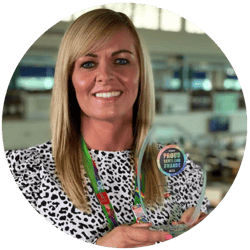
About Louise Bailey
Louise started her career in banking and progressed through training, operations and contact centre leadership across finance and energy. While leading a department of around 500 people, Louise founded an LGBTQ+ network, which was her first introduction to DEI in the workplace, and soon became her full-time role as it grew into a wider belonging strategy.
The changing world of DEI
Q: What does fairness mean to you in today's complex world of work? Where do you see fairness being tested in the workplace currently?
"I think sometimes the DE&I acronym turns people off, but if we use the word 'fairness' it’s much more relatable. Everybody can think of a time when they were treated unfairly or not included. For me, fairness is about making sure people are treated well, looked after and given equitable opportunities to flourish. The word 'equitable' is so important - equitable access to opportunities, rewards and progression.
"Fairness to me really is around creating an environment where every individual has access to the same opportunities, resources, tools, and respect, regardless of their identity, background, or circumstances."
"Fairness isn’t demonstrated by what’s written in policies, it’s demonstrated by the lived experiences of people and the outcomes those policies produce. It’s not about treating everyone the same or treating people how you want to be treated. It’s about understanding people and treating them how they want to be treated. For reasonable adjustments there's a need to reach out to someone directly, so if someone does need support, it’s not an easy path for them as they’re being treated differently straight away just by saying they need help. That’s a systemic barrier. I’ve actually heard some leaders saying, 'Oh no, we won’t give them that because that’s an unfair advantage to them.' And they’re not actually seeing that this person needs the adjustments to bring them up to a level playing field."
Q: What’s currently missing from the current debates and conversations? How do we re-shape and own the narrative?
"People remember how something made them feel, and I think that’s what’s missing - that human viewpoint. It’s not about policies, stats or tick boxes. When we hear stories from people who share their lived experiences, that’s when we start to understand why this is important. This doesn’t have to be stand-alone work, but it does need to be consciously considered in every decision that’s made in the boardroom. Decisions are often made based on profit, procedures or policies, or based on the majority of people, but what isn’t being considered are the voices and needs of underrepresented groups."
"We need conscious inclusion in the boardroom. If companies want to succeed, workplaces need to represent their customers."
"Businesses need diversity of thought and they need to hear diverse voices to make sure they get it right. We also need to keep learning, as the landscape and the language changes all the time. I talk a lot about equity and inclusion being thread throughout everything we do, but I still think we need stand-alone experts in this field, acting as consultants, to make sure we get things right upfront and that we continue listening to people and learning from their experiences."
Q: What core skills do you think inclusion professionals need currently?
Louise shares four skills she thinks every effective DEI professional needs in order to succeed.
"Understand who you need to influence and how you’re going to do it. Talk about why some of these things are important and what impact they can have. Start small and build up."
"In this role you can face a lot of criticism, and you need to be able to deal with difficult situations. Don't step away from the conflict, war and hate going on in the world. Make sure your people are feeling OK."
"Mentoring people and taking them on a journey is important. Have conviction behind what you stand for. People want to work for businesses with strong values."
"This work isn’t about quick fixes. It’s not just about changing a policy. You need to make sure people are trained and that change becomes part of the culture."
DEI in practice
Q: We are seeing more of an alignment with topics such as wellbeing. Are you seeing this and what other roles and functions do you see DE&I aligning with?
"When people feel like they genuinely belong, that impacts their wellbeing. I see that very much through our Mind (mental health, wellbeing and neurodiversity) network, in terms of people who are living with mental ill health. Through a strong culture of psychological safety, people will feel able to raise issues more easily, talk openly with their leaders, and have faith that when they speak about their wellbeing, it is taken seriously."
"If we get inclusion, equity and belonging right, that will naturally support people’s wellbeing at work."
"There's also a link with health and safety. When people feel psychologically safe, they feel more empowered to raise wider health and safety issues. Health and safety, diversity, inclusion and belonging all cross over. It is that golden thread that should run through everything that we do – our policies, benefits, training – everything should consider inclusion. When people are struggling and going through a really hard time, but feel their employer has supported them, they remember that feeling of being safe and supported, and they are more loyal to that employer."
Inclusive leadership in practice: Redesigning OVO's uniforms to be culturally inclusive
"For me, inclusive leadership is about thinking beyond compliance and asking broader questions about people’s needs. When we were redesigning our engineers’ uniform, there were safety and compliance requirements, but I was also thinking about sensory needs, menopause, periods and body temperature. Then I asked, 'What if someone wears religious headwear? Why aren't we inclusive towards that?'
"I discovered there was no material in the UK that met ISO (international safety and quality standards) requirements to be compliant for a hijab or turban. This became an 18-month project. We sourced material from Germany and worked with our Belief (religious) employee network to design the headwear. People were sewing prototypes to test different materials and ways of wearing them.
"We’re now attracting people who may not have felt able to tell us before. For me, it became personal - I was determined not to give up."
"As a result of the project, we increased ethnic representation, and people started self-declaring that they were Muslim.
Disclosure rates went from zero to 3%."
-1.png?width=200&name=Resource%20and%20Services%20Images%20-%20incl%20wash%20(12)-1.png "Resource and Services Images - incl wash (12)-1")
A word from Laura
Laura Drakeford, Partnerships Manager at FAIRER, shares her key takeaways from Louise's interview.
True inclusion is visible and lived, beginning with staff uniforms that promote unity while representing diverse identities. When people feel seen and respected, inclusion moves beyond symbolism into daily practice. Psychological safety is central to this: staff must feel safe to speak up, be themselves, and make mistakes without fear, and this directly promotes wellbeing, engagement, and performance. However, inclusion cannot rely on intention alone. Ongoing, high-quality training equips staff with the skills, language, and confidence to act inclusively. When inclusive best practice is consistently taught, reinforced, and modelled, it becomes embedded in organisational culture rather than remaining an isolated initiative effort.
If you'd like to be considered for an expert interview, or want to further discuss any of the themes covered in Louise's interview, please get in touch.
More expert interviews
DEI expert interview: Peter MacDonald Hall (UCA)
Start ReadingDEI expert interview: Zoe Kennedy (King’s College London)
Start ReadingDEI expert interview: Brit Pickering (NESO)
Start ReadingDEI expert interview: Iman Atta (Tell MAMA)
Start ReadingDEI expert interview: Lisa Perkins (Wesleyan)
Start ReadingDEI expert interview: Mark Lomas (Lloyd's of London)
Start ReadingWant to discuss your DEI journey?
Book a complimentary one-to-one consultation session with us and let us explore your specific needs in detail. Contact us to start the conversation today.