
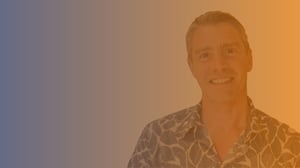
Friend of FAIRER interview: Andy Goff, Capgemini
Home / DEI expert interview: Andy Goff
As part of our Expert Interview series, Laura Drakeford, Inclusion Partner, sat down with Friend of FAIRER Andy Goff, Inclusion & Wellbeing Manager at Capgemini, to discuss DEI's biggest and most pressing topics.
-1.png?width=250&height=250&name=Untitled%20design%20(2)-1.png "Andy")
About Andy Goff
Andy is UK Inclusion & Wellbeing Manager at Capgemini, with over 20 years of experience across HR, operations, and employee engagement. Andy’s career has moved from IT support to Inclusion and Wellbeing, where he is focused on promoting inclusive leadership, allyship, psychological safety, and multi-generational workplace initiatives.
-
D&I Innovation Award
-
Global Inclusion Excellence Award
-
HR Champion of the Year
-
Diversity Trailblazer, British LGBT Awards (special mention)
-
Featured in Attitude Magazine
-
Judge for the UnderOne D&I Awards for two years running, plus a speaker slot on a 2025 panel
The changing world of DEI
Q: What does fairness mean to you in today's complex world of work? Where do you see fairness being tested in the workplace currently?
"In today's workplace, fairness goes beyond treating everyone the same. It means recognising systemic barriers and actively working to remove them. It's about making sure everyone in Capgemini has fair and equal access, participation, and opportunity in the workplace and making sure employee policies and practices reflect this.
"Fairness to me really is around creating an environment where every individual has access to the same opportunities, resources, tools, and respect, regardless of their identity, background, or circumstances."
"Fairness also involves transparency in decision-making and consistency – building standards that people can trust and thrive in the workplace. At Capgemini, we recognise the importance of flexible working in supporting optimal work-life balance. More than ever, people at work want a level of choice as to where and how work gets delivered. Leaders who (where possible) encourage their team members to take time out to do whatever it is that gives them a mental health boost - go for a walk, speak to a friend, go to the gym, will undoubtedly experience teams with higher engagement, loyalty and productivity.
"Wellbeing and mental health support is also high on our list of priorities. It’s not a one-size-fits-all. For us, it’s about offering a range of choices. We work with a number of expert partners and organisations to give our employees a smorgasbord of different resources to suit different people, no matter their circumstances, whatever life stage, or whether they’re a senior leader or somebody that’s just joined the organisation. We want to make sure there is something for everybody and it’s accessible for all. We’re not saying, 'This tool is only available for these people at this grade.' It’s rather, 'Here is everything. Pick and choose what is right for you.'"
Q: What core skills do you think inclusion professionals need currently?
"Inclusion professionals need skills like cultural and emotional intelligence. They require an enterprise-wide mindset with functional technical expertise considering legal, HR and social structures. They need to be curious and empathetic. They should operate with a growth mindset, demonstrating accountability, strong decision-making, critical thinking, be data-driven and remain agile. I'd now also mention leveraging AI and embracing change. Stakeholder management is also absolutely key, as well as influencing and storytelling. For me, those are probably the most important ones."
Q: How has, or how do you think your role will change in response to the current landscape?
"I think our roles constantly change, both as a function of the socio-economic and commercial influences, and in response to the changing shape of AI and the influence it has on every aspect of work and the workplace. We are moving beyond representation and support for specific demographic groups, such as gender, ethnicity, or disability, to emphasise embedding inclusion into everyday systems, processes, and culture.
"We’re referring to this as 'inclusion by design' or 'cultural equity'. As a result of this, we’re moving away from targeted groups to active allyship, and we’re reframing inclusion as being for everyone. This goes across the whole inclusion and wellbeing landscape. It’s something we’re trying to encourage everyone to see themselves in – inclusion for all. This is part of our onboarding. It’s really important for us to make sure that people joining our Capgemini team know what is available to them. From my point of view, you spend so much time in the workplace, and when you’re working remotely people often find they’re jumping from call to call and not really engaging or connecting and networking with people.
"Our networks are a great place to connect with people from different parts of the business. Being such a large organisation, people don’t necessarily realise the other roles and things happening elsewhere throughout the company. We also work closely with our talent attraction and recruitment teams, who are very clued up on what we have internally. Even at the interview stage, they often reinforce our networks and what is available.
"We do a lot as a business in the inclusion space. We win quite a few awards and are finalists for many as well. More than ever, people are looking for organisations that genuinely support inclusion and where they can see themselves. As an LGBT individual or someone from an ethnic background, people want to work for organisations that don’t just talk about inclusion but actively promote it and improve on it every day."
DEI in practice
Q: We are seeing more of an alignment with topics such as wellbeing. Are you seeing this and what other roles and functions do you see DE&I aligning with?
"We try to bring wellbeing into all conversations. We look at wellbeing under four key pillars of focus. We have mental wellbeing, physical wellbeing, social wellbeing, and financial wellbeing. Whenever we are running sessions, whether it’s the Inclusive Futures team or the networks, where there are sensitivities, we ensure that at the end, we share all the support and resources that Capgemini has available to them on this, should they need.
"Wellbeing is as important as inclusion"
"We have an amazing health and wellbeing hub for the UK, and it splits everything down. We’ve got sections for everyone, for people managers and for parents and carers. We’ve also got wellbeing champions throughout the business. If people are struggling, they need to know how to access different levels of help and support – and quickly.
"Our wellbeing champions are embedded in the business across our UK locations and are there for anybody to reach out to. They listen non-judgementally and direct people to a broad range of services depending on the need. We’ve been embedding wellbeing into our people manager training, which we started rolling out in 2025, to encourage wellbeing and mental health conversations as part of the everyday.
"By approaching mental health and wellbeing in this multi-faceted way, we are building psychological safety, so when people start having issues they feel safe to come forward early, to use the support available and find a way forward before getting to breaking point.
"Whilst we provide wellbeing support and services for everybody, an area of increasing focus is mental health for men, who will often not reach out and seek help.
"Our group team has recently launched a mental health conversation starters pack, which will be fully rolling out in the UK early this year. Whilst we want everyone to feel psychologically safe enough to seek help at work, we recognise that, for some people, having a mental health conversation in the workplace doesn’t feel right and so it is important that we provide avenues to support outside work as well as avenues inside.
"Normalising mental health conversations in the workplace will make it easier. Recently, we had a pop-up from the taskbar asking people if they were aware of the health and wellbeing hub and asking them to bookmark it. We all go through fluctuations of good and bad wellbeing, and sometimes it’s important to recognise that and think about what support you can use. If you’re not happy at work, that goes home with you, and vice versa. We want to create an environment where people can be open and talk about it."
Q: We at FAIRER do a lot of work on the inclusive leadership. What skills, traits or behaviours do you think leaders need to be truly inclusive leaders in these complex times?
"With regards to leadership, things like cultural intelligence and bias awareness are really important. We all have bias so building awareness of our bias, consciously watching out for them and slowing down our decisions can help us make sure our biases aren’t clouding our judgment. Adopting an approach of life-long learning and curiosity and being genuinely empathetic will build emotionally intelligent leadership behaviour.
"There are some great practices, like reverse mentoring that have been shown to be really effective and impactful for both the mentors and mentees. My own experience of reverse mentoring one of our VPs illustrated the benefits of sharing vulnerability and led to sharing the benefits of the experience in other business areas. One of the great series that’s been run, managed and owned outside of my team, was a leadership series where some of our VPs came in to talk about difficult subjects."
"When you start hearing senior people talking about these topics, it makes the conversations a lot easier for junior staff."
"If that person has spoken about it, then it’s OK to open up and share. Role modelling for leaders is really key. Everybody wants to be able to see themselves in a leader. When people talk about their background, whether they come from a deprived background, are part of the LGBT community, or have faced disability, all of those things help engage people and make the conversations more impactful."
-1.png?width=200&name=Resource%20and%20Services%20Images%20-%20incl%20wash%20(12)-1.png "Resource and Services Images - incl wash (12)-1")
A word from Laura
Laura Drakeford, Partnerships Manager at FAIRER, shares her key takeaways from Andy's interview.
"Leaders play a crucial role in inclusion and can build trust by openly sharing experiences. Employees value organisations where inclusion is clearly demonstrated through actions, not just policies, so effective leaders must recognise their own biases, show cultural intelligence, and commit to ongoing learning. Inclusion is strongest when DEI and wellbeing resources are personalised and accessible to all. Fairness in the workplace is about equity - not equality - taking into account systemic barriers and adapting policies to meet diverse needs. If organisations do this right, they'll see an impact on retention."
If you'd like to be considered for an expert interview, or want to further discuss any of the themes covered in Andy's interview, please get in touch.
More expert interviews
DEI expert interview: Peter MacDonald Hall (UCA)
Start ReadingDEI expert interview: Zoe Kennedy (King’s College London)
Start ReadingDEI expert interview: Brit Pickering (NESO)
Start ReadingDEI expert interview: Iman Atta (Tell MAMA)
Start ReadingDEI expert interview: Lisa Perkins (Wesleyan)
Start ReadingDEI expert interview: Mark Lomas (Lloyd's of London)
Start ReadingWant to discuss your DEI journey?
Book a complimentary one-to-one consultation session with us and let us explore your specific needs in detail. Contact us to start the conversation today.