

Friend of FAIRER interview: Ken Kittoe
Home / Inclusion expert interview: Ken Kittoe
As part of our Friend of FAIRER series, Ken Kittoe, Head of Inclusion & Diversity for the UK & Lloyd’s at AXA XL, sits down with FAIRER's Inclusion Partner, Laura Drakeford, to discuss why the future of inclusion starts with talent, not labels.
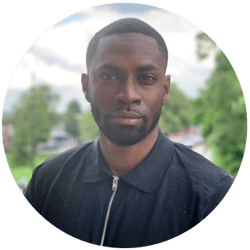
About Ken Kittoe
Ken Kittoe is Head of Inclusion & Diversity for AXA XL’s UK & Lloyd’s and Reinsurance Business Units. Having spent more than four years across the AXA Group, he previously served as D&I Manager at AXA UK. Before moving into inclusion, Ken spent seven years in recruitment, where he progressed into leadership and established his organisation's first dedicated D&I function. Today, he works closely with senior leaders to embed inclusion into business strategy, talent development and organisational performance.
Talent is everywhere. Opportunity isn't
Ken explores why talent is widely distributed, while access to opportunity is not, and why creating meaningful entry points is essential to building a fairer workforce.
"When I think about fairness in today's workplace, the first thing that comes to mind is entry. Talent is everywhere, but opportunity isn't.
"Growing up in East London, I went to a school where only around 27% of my year group passed their GCSEs. That wasn't because there was a lack of talent. People didn't know what they could achieve, and they didn't know the importance of education or where it could take their careers.
"Without the entry points into organisations, it becomes an unequal playing field."
"I was lucky. My parents moved to the UK from Ghana in the 1980s, and they drilled into me and my three brothers that education would open doors – doors that might otherwise be closed because of how you look, how you sound or your background. They always encouraged us to do the best we could in everything we were involved in.
"My school experience showed me that not everyone has an equal opportunity to achieve their dreams or even see people who look like them succeeding in careers outside of the stereotypical ones.
"The reality is there are talented people who could become underwriters, claims specialists or inclusion professionals. But without the entry points into organisations, it becomes an unequal playing field. That's why a big part of my work has always been asking: how do we bring talent in from different walks of life? How do we make sure we reflect the communities we serve? And how do we remove some of the barriers that stop people joining our sector in the first place?
"Fairness is probably a loaded word because some people would say it's unfair to create opportunities for certain groups. But when you look at the bigger picture, that's exactly what creates fairness.
"We need workforces that reflect the communities we work in, rather than the same demographic dominating every level of an organisation. Otherwise, we just end up talking to ourselves, and it becomes an echo chamber."
Inclusion starts with strategy, not just good intentions
For Ken, inclusion starts with a strategic approach to understanding talent, barriers and business needs.
"To achieve true fairness, you first need to map out what it is you're actually trying to achieve. It isn't about giving handouts or employing people just because they look or sound a certain way, or because they come from a particular background. It's about looking at your organisation holistically and asking, 'what skills are we missing? What perspectives are we missing?' Then you can start asking a more important question: 'what barriers are stopping different people from joining our organisation or progressing once they're here?'
"The reality is that different groups face different barriers. For someone from a lower socioeconomic background, it might be access. They may struggle to afford travel to interviews, or they might not have the money to buy a suit or professional clothing. Those are genuine barriers. Historically, for many women, flexible working can be a deciding factor. They're looking at whether an organisation offers part-time opportunities or flexibility that fits around their wider responsibilities. If those things aren't there, they may choose not to apply, or they may join and then leave because the workplace simply doesn't fit their life.
"For inclusion professionals, that means developing a much stronger strategic mindset. Diversity and inclusion contribute directly to business outcomes, so the language needs to shift. We need to think strategically about what the business is trying to achieve and how inclusion can help deliver those outcomes.
"Insurance is a good example. We have an ageing workforce. Around 24% of people across the sector are expected to retire over the next ten years. These are colleagues who have built successful careers over decades, and that's a fantastic thing. But it also creates a significant business challenge. If nearly a quarter of your technical expertise and senior talent is going to retire, what does that mean for business continuity? That's where inclusion can have a real impact."
Changing the conversation from D&I to talent
Ken believes the conversation needs to move beyond labels and towards talent, with inclusion playing a key role in attracting, retaining and developing people.
"Rightly or wrongly, I think the language around D&I will change. Words matter. Whether people call it D&I, DEI, I&D or something else, I think we need to bring the conversation back to talent. This work is about understanding the talent we already have in an organisation, the talent pools we're trying to attract, and what happens to that talent once people join the business. For me, cream should always be able to rise to the top. If that isn't happening – regardless of what someone looks like, where they come from or what their life circumstances are – that's where the issue is.
"Sometimes people think inclusion is about celebrating International Women's Day, Black History Month or Pride Month. Those celebrations have a time and a place. Cultural awareness absolutely matters. But if you truly want inclusion to become a strategic driver in your organisation, it has to be about talent. How are you reducing attrition? How are you retaining talented people? How are you becoming an employer of choice?"
Meet people where they are
Making inclusion accessible means meeting people where they are and helping them recognise how their own experiences connect to the wider conversation.
"Earlier in my career, I used to get frustrated that people didn't understand what we were trying to achieve. But you can't expect everyone to be an inclusion expert. Most people haven't had these conversations before. That's why you have to meet people where they are.
"At AXA XL, to bring colleagues along on the journey, we changed the conversation around inclusion and expanded the concept beyond protected characteristics. That helped people connect inclusion to their own experiences, whether caring for a parent, raising young children or balancing other responsibilities outside work.
"By broadening the conversation in this way, people start to understand that inclusion is about creating an environment where different people, with different life stories and different circumstances, can be themselves, find their place and progress.
"That's exactly why we built our 'Authentic You' strategy. Regardless of who you are, we want to create an environment where everyone can grow and thrive as an authentic version of themselves. I deliberately don't say 'bring your whole self to work'. Authenticity is different. Everyone can bring their values, morals and who they are as a person into work. That's what we're trying to create."
"Once you broaden the conversation, people start to understand that inclusion is about creating an environment where different people, with different life stories and different circumstances, can be themselves."
Building a multi-generational workplace
At AXA XL, a focus on multi-generational inclusion is helping to support people at different stages of their careers, from early-career talent to those aged 50 and above.
"One of our biggest priorities over the next 12 months is our multi-generational strategy. When we looked at the data, it reflected what we're seeing across the insurance sector. We know we need to bring more young talent into the business, so early careers is a big part of that strategy. It's about making sure there are enough entry-level opportunities for people to join, grow and build long-term careers with us.
"But it's also about broadening where that talent comes from. We don't want to keep attracting the same candidates through family members or friends of friends. We want to reach different communities and bring in people with different experiences and perspectives.
"At the other end of the spectrum, we're equally focused on our 50-plus population. If you're 50-plus in our organisation, what does that stage of your career look like? You might not be ready to retire. You may still have another 15 or 20 years in the workplace, so how do we support you during that stage of your career?
"Just as importantly, how do we help people give something back? We're exploring different ideas, whether that's more flexible ways of working, consultancy-style support during our busiest periods, or creating an alumni network where experienced colleagues can continue sharing their knowledge.
"Someone who's worked in insurance for 30 or 40 years has an incredible amount of technical expertise. Rather than losing that knowledge overnight, how can we create opportunities for people to mentor others, support junior colleagues and transfer that expertise across the organisation?"
Measuring what matters
Beyond formal metrics, understanding how inclusion is experienced requires a combination of data, conversations and what Ken describes as the organisational "vibe check".
"One thing I've learnt is that inclusion works best when everyone understands the role they play in delivering it. That's why we've worked hard to make sure our business resource groups all have a common goal. Rather than every network doing its own thing, we asked how each one could support the wider inclusion strategy, for example:
-
"For our gender equality network, that meant focusing on practical career development. They run sessions on public speaking, financial wellbeing and returning to work – real topics that help people build confidence and progress their careers.
-
"Our ethnicity network has focused on building community while also helping managers better understand difference. Earlier this year they ran a session on supporting colleagues during Ramadan, giving managers practical advice and helping to break down myths and misconceptions.
-
"Our disability and neurodiversity network partnered with HR to introduce Ability Passports, giving colleagues a simple way to explain how they work best and making those conversations with managers much easier.
"We look at the formal metrics: attrition, retention, progression and engagement. We look at whether people feel they belong, whether they're experiencing or witnessing discrimination, and whether those trends are moving in the right direction.
"But I also believe in what I call the 'vibe check'. That's the informal part. It's walking around the business, speaking to people, asking how they're doing and understanding how the organisation actually feels. The data tells you what's happening. The conversations tell you why.
"When you bring those two things together and get them going in the right direction, then it's a win."
Hear Ken speak at FAIRER Conference London on 22 October 2026
-1.png?width=200&name=Resource%20and%20Services%20Images%20-%20incl%20wash%20(12)-1.png "Resource and Services Images - incl wash (12)-1")
A word from Laura
Laura Drakeford, Inclusion Partner at FAIRER, shares her key takeaways from Ken's interview.
One thing that stood out throughout my conversation with Ken was his ability to connect inclusion back to business without losing sight of the people at its heart. He speaks about talent, opportunity and strategy with the same passion as he does about belonging and authenticity, reminding us that these aren't competing priorities – they're deeply connected. His perspective is both optimistic and practical: inclusion isn't about lowering standards or creating advantage; it's about ensuring talented people have the opportunity to rise. In a world where the language around DEI continues to evolve, that's a message that feels both timely and refreshingly clear.
If you would like to be considered for an expert interview, or want to further discuss any of the themes covered in Ken's interview, please get in touch.
More expert interviews
DEI expert interview: Peter MacDonald Hall (UCA)
Start ReadingDEI expert interview: Zoe Kennedy (King’s College London)
Start ReadingDEI expert interview: Brit Pickering (NESO)
Start ReadingDEI expert interview: Iman Atta (Tell MAMA)
Start ReadingDEI expert interview: Lisa Perkins (Wesleyan)
Start ReadingDEI expert interview: Mark Lomas (Lloyd's of London)
Start ReadingWant to discuss your DEI journey?
Book a complimentary one-to-one consultation session with us and let us explore your specific needs in detail. Contact us to start the conversation today.